
A very impressive and monumental 19 century Irish bookcase in Mahogany.
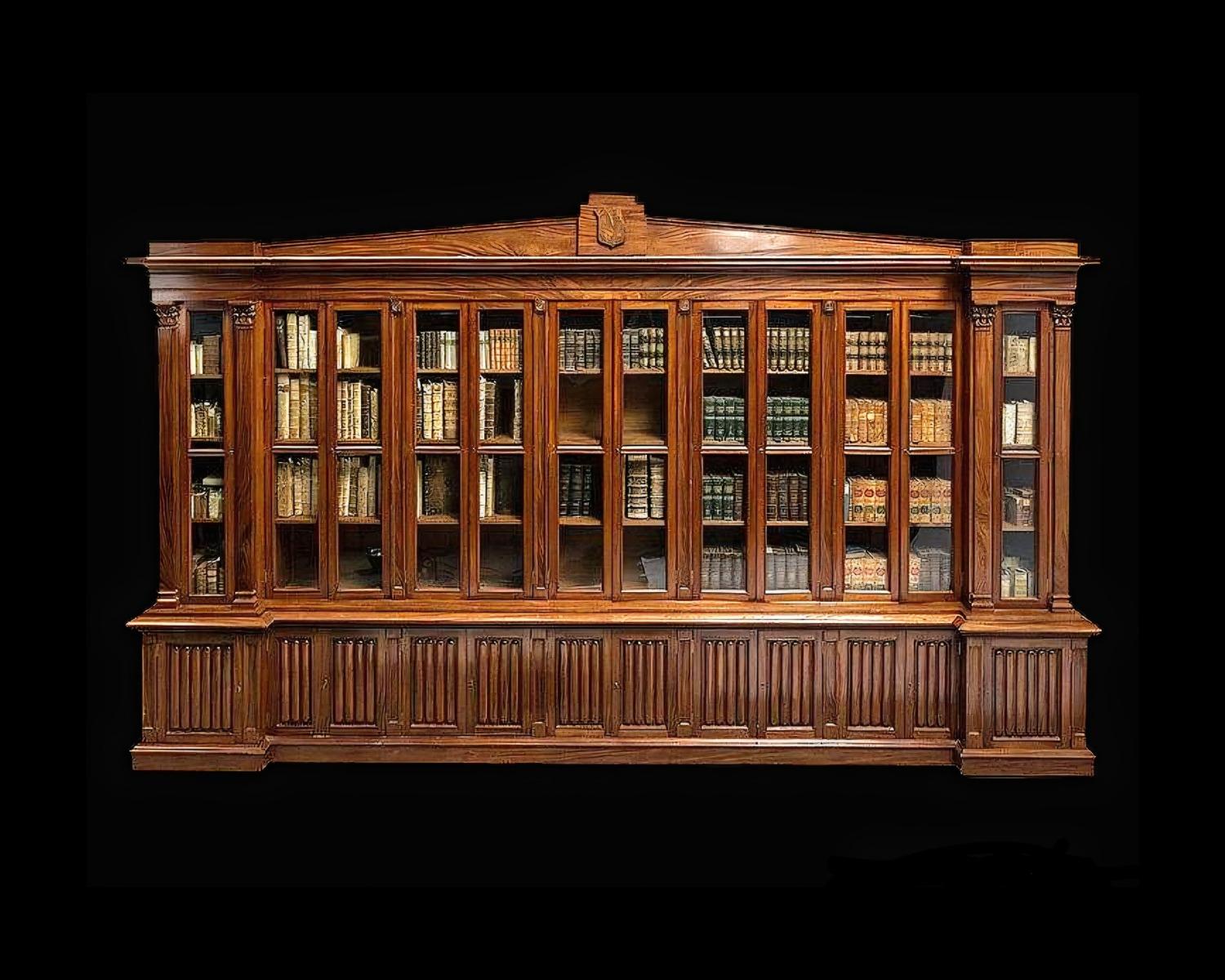
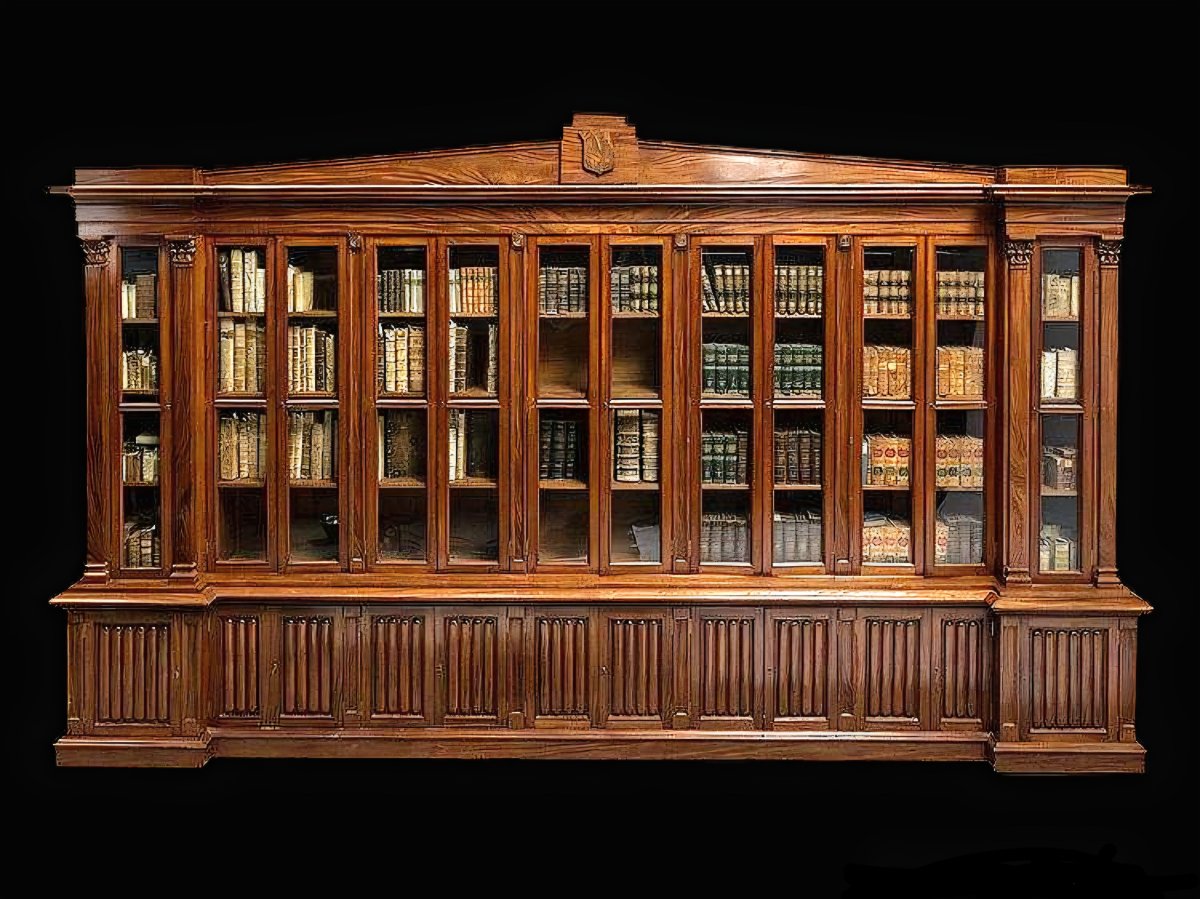
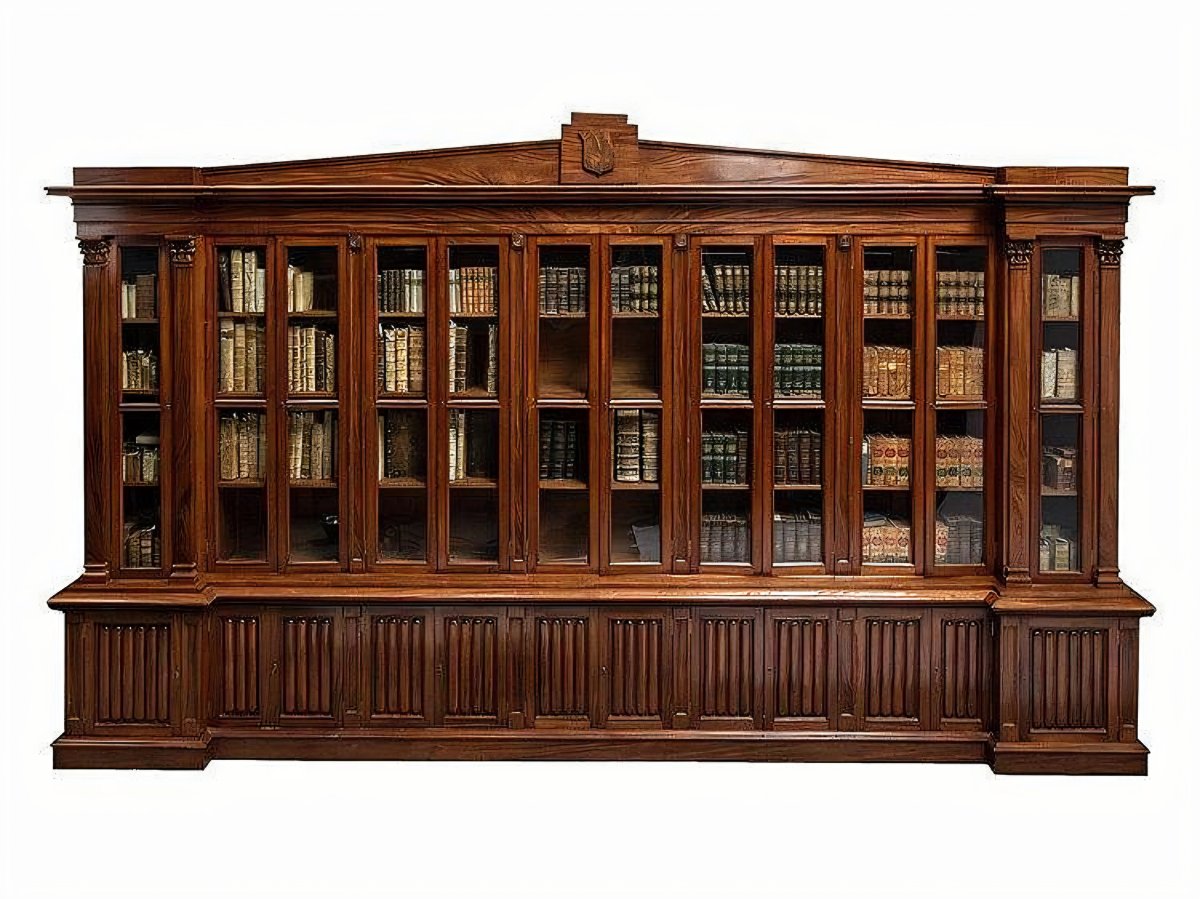
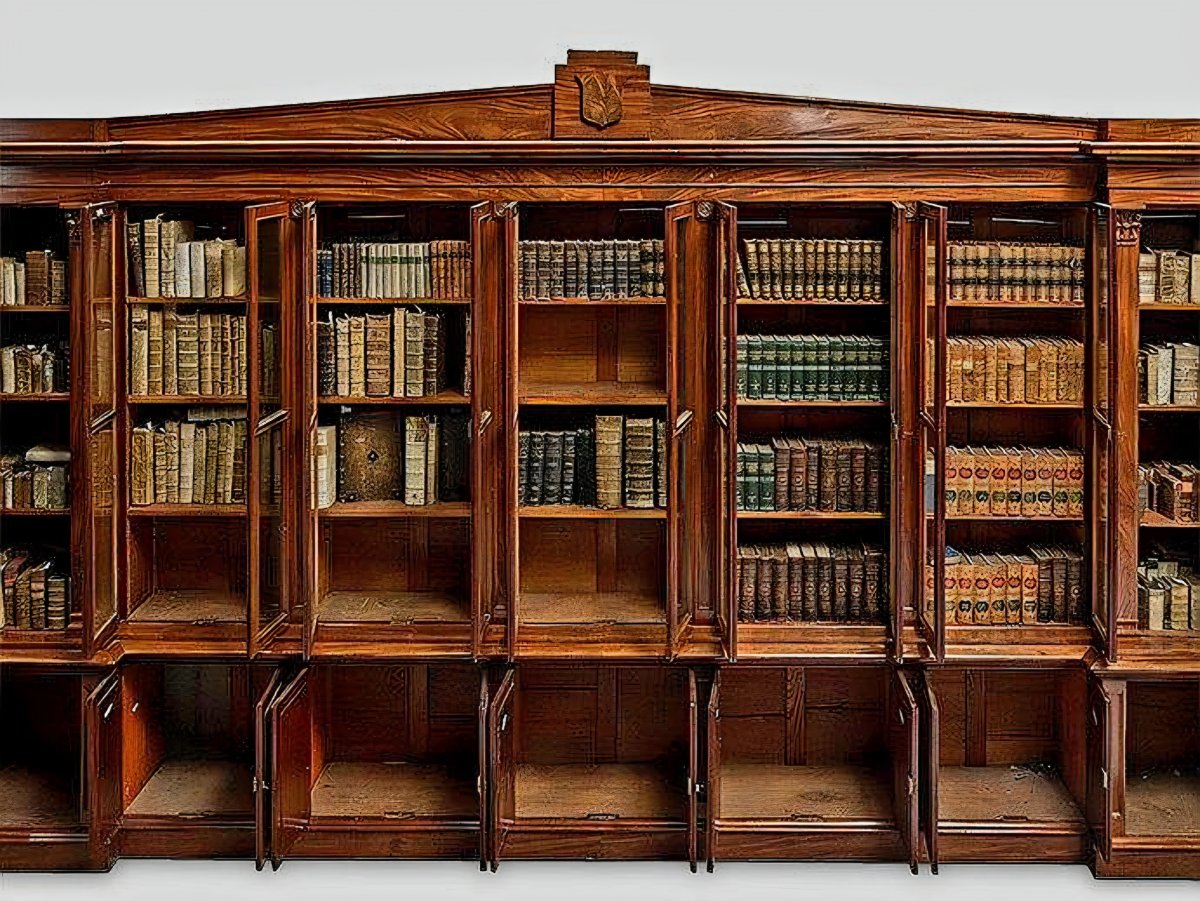
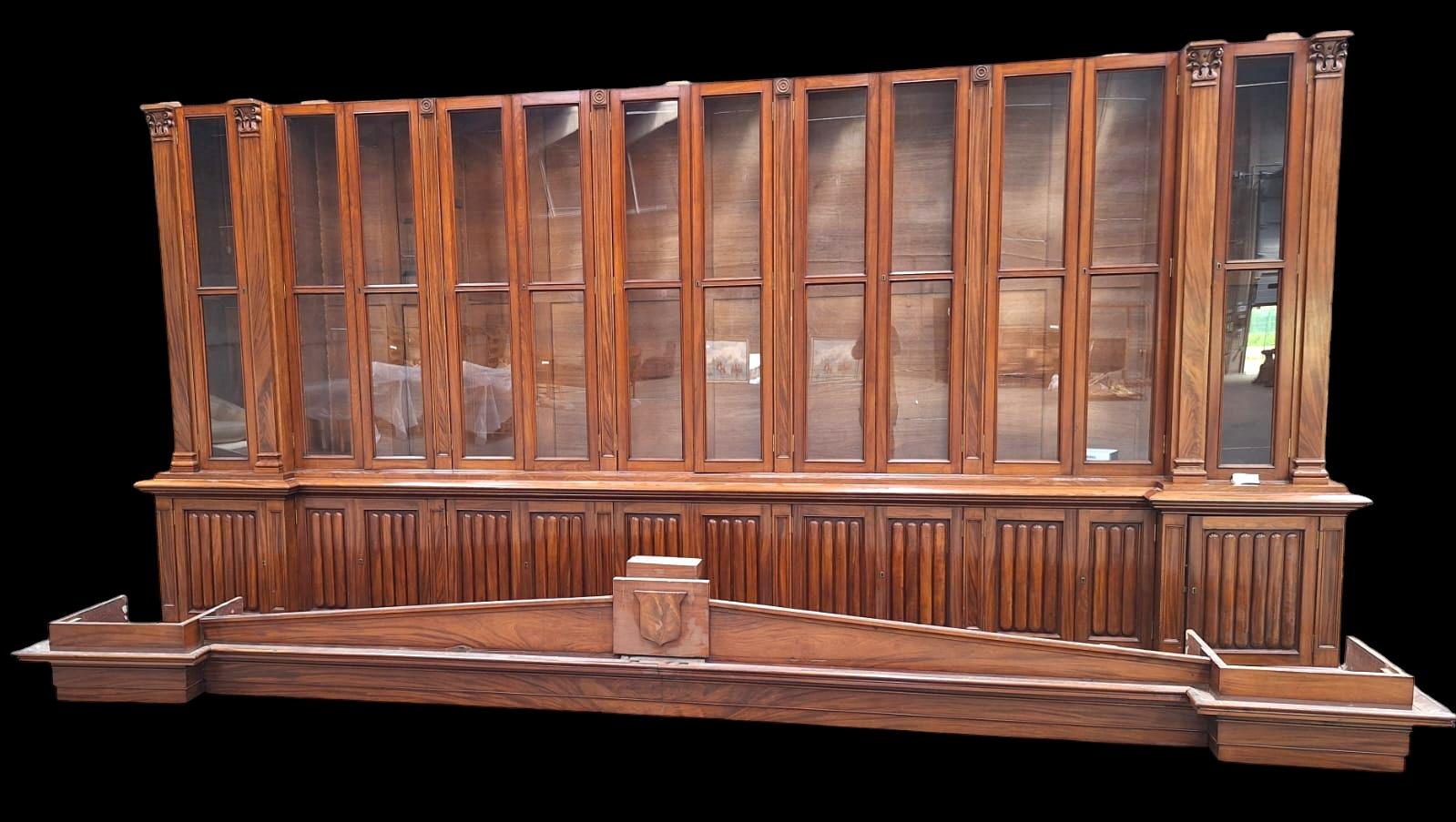
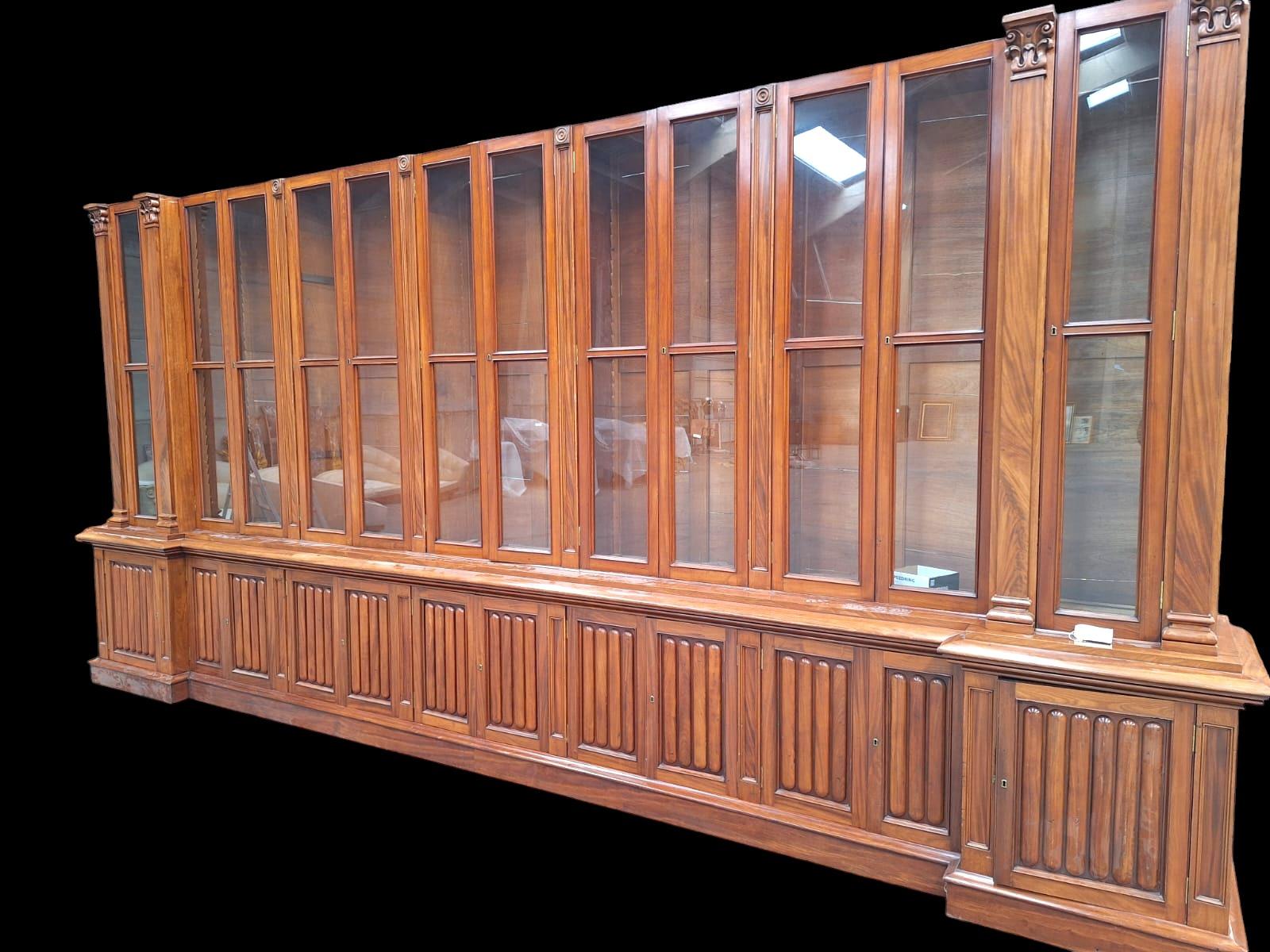
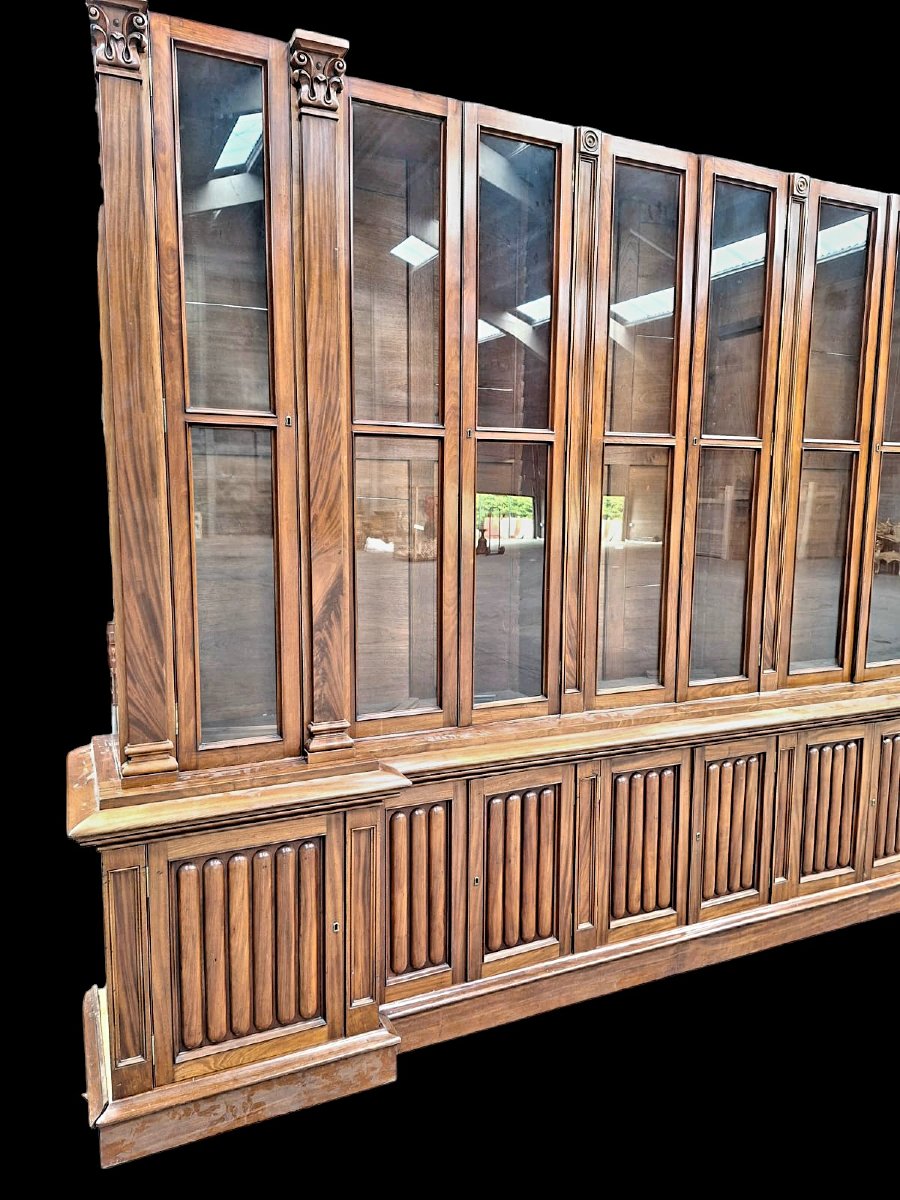
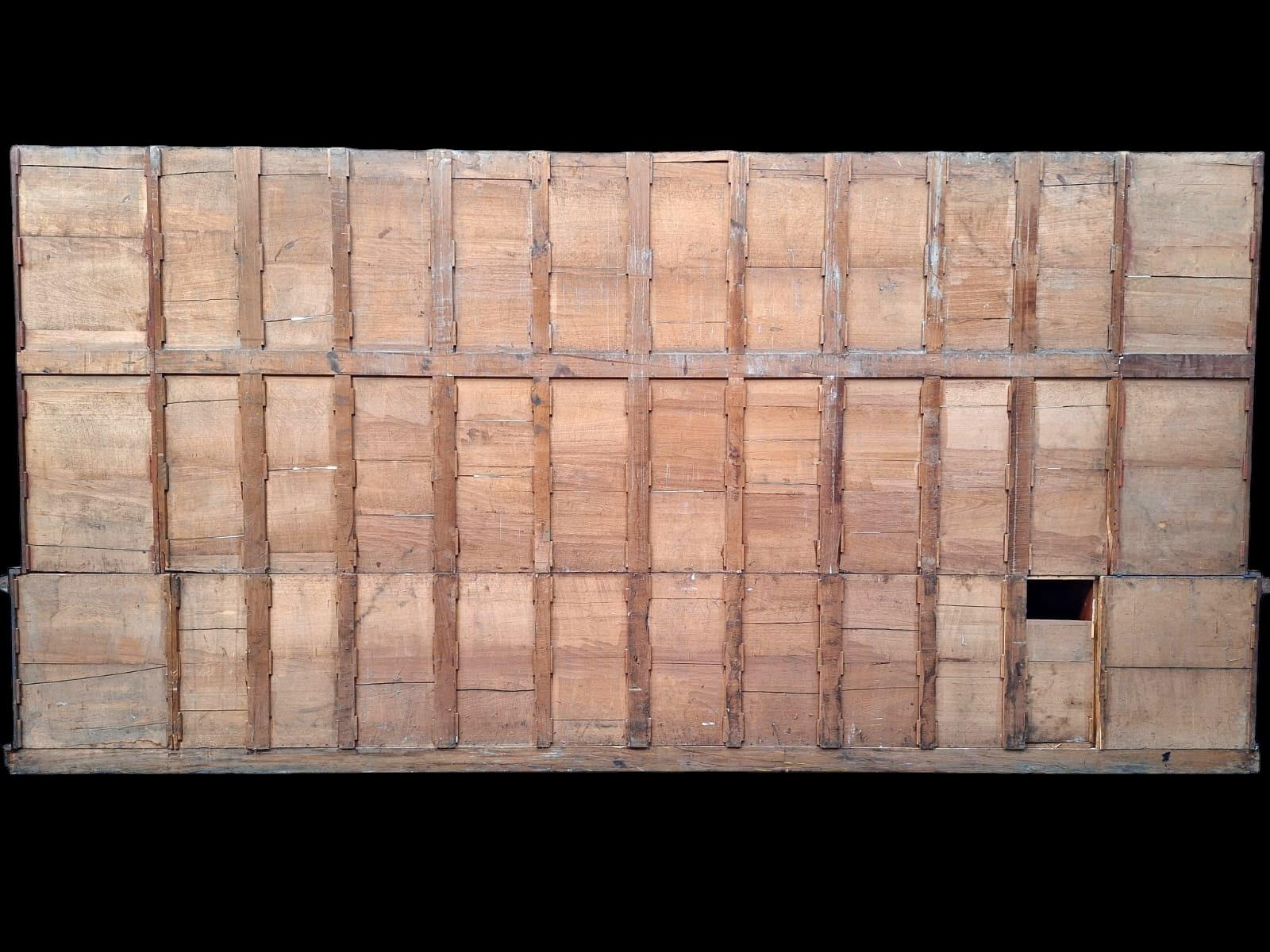
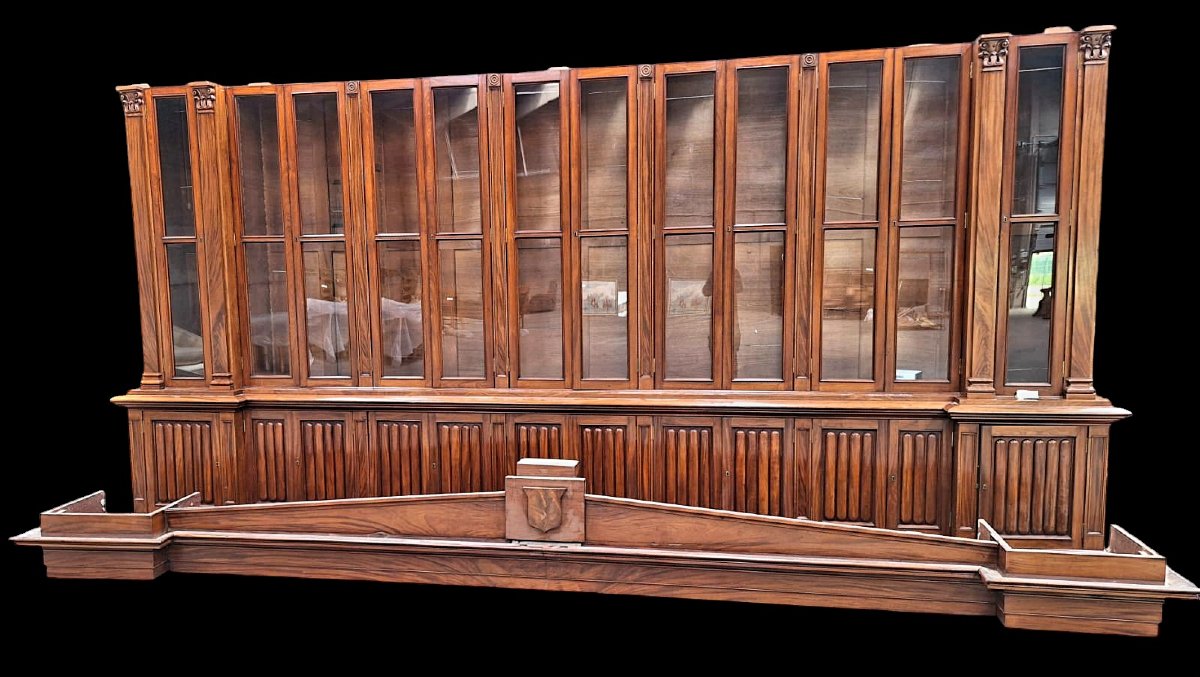
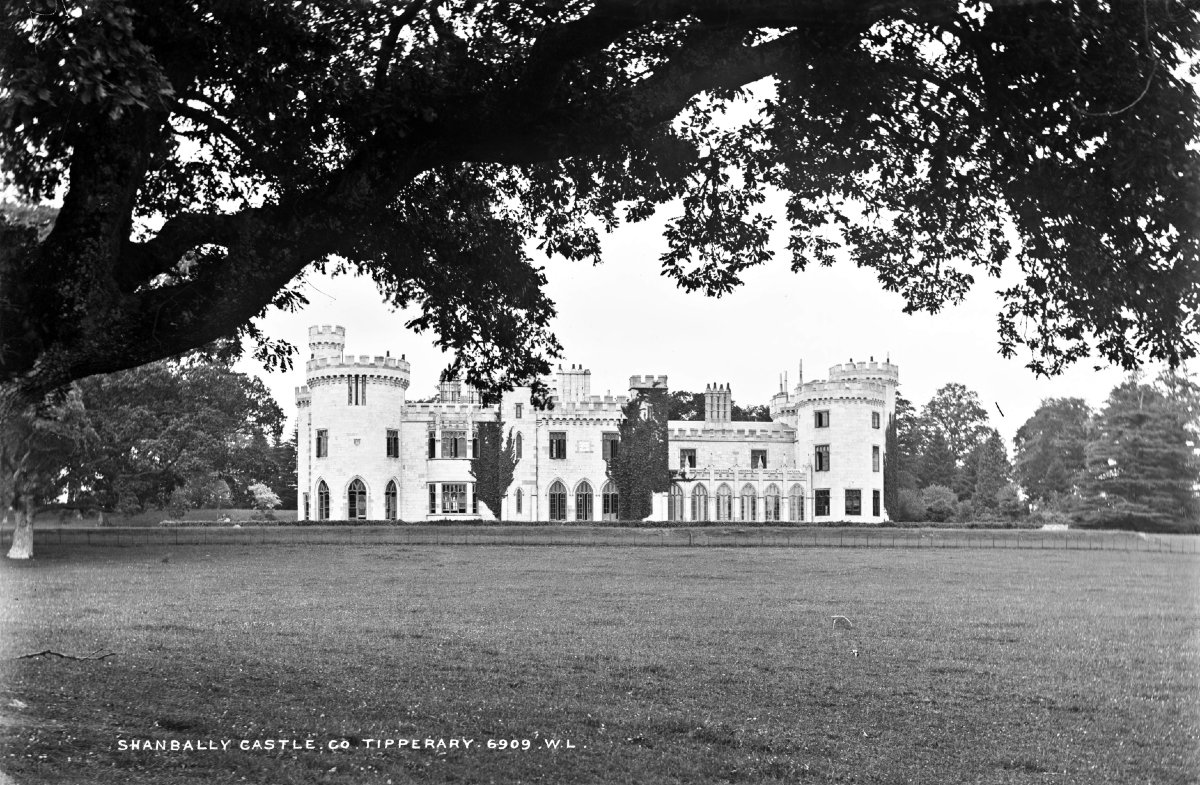
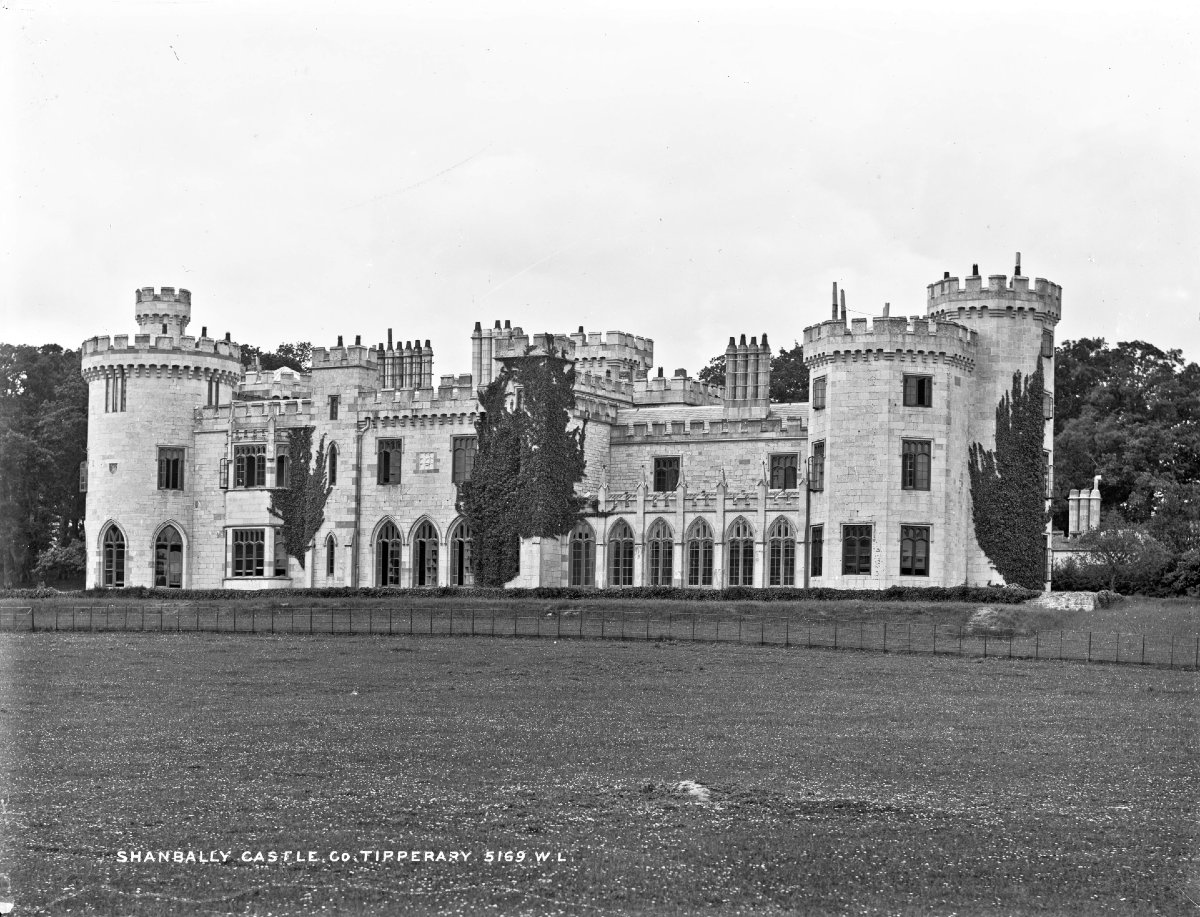
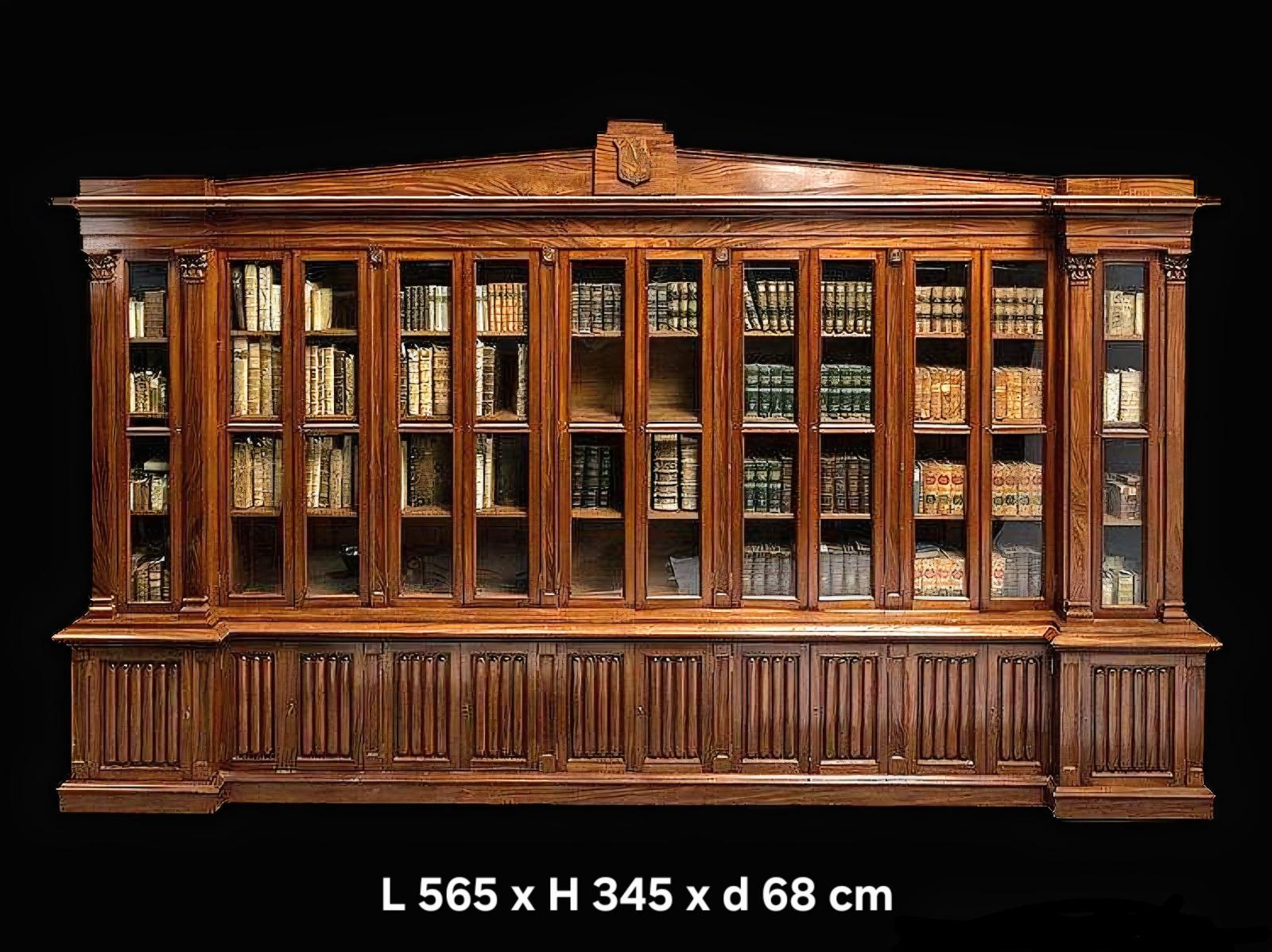
A spectacular bookcase made of mahogany and mahogany veneer, featuring an architectural design; it opens to reveal twelve glass-paned doors in the upper section and twelve solid, carved doors. The upper section, set slightly back, features twelve glass-paned doors, while the lower section features twelve solid doors adorned with wide grooves. The projecting side panels are adorned with pilasters topped with capitals. The triangular pediment is adorned with a coat of arms. Irish, mid-19th century. The bookcase bears the pencil inscription “Jacob Graham, Maker, 1849” on the underside of the lower right section. A “Jacob Graham and Son” is listed as operating in Clonmel, Co. Tipperary, in the 1820s in Pigott’s Commercial Directory, 1824. The bookcase is designed in the Greek style, with a temple pediment crowned by a stepped plinth supporting a scutcheon for a bust, echoed by the projecting side cabinets topped with a plinth. The bookcase evokes lyric poetry with pilasters topped by beaded Venus hooks accompanied by Apollo’s palm leaves on the paired composite pilasters of the cabinet. Its chest-of-drawers doors are carved with sturdy reed-style godrons in the manner of Elizabethan trompe-l’œil books bound in linen. The bookcase’s robust architecture reflects the Regency style promoted by the magazine *The Repository of Arts*, published from 1809 to 1828 by Rudolph Ackerman, as exemplified by a model of a Greek library designed according to correct principles and published in 1824 (January, III, 3, pl. 3, p. 59). The bookcase was likely commissioned by Cornelius O’Callaghan, 1st Viscount Lismore (1775–1857), and designed for Shanbally Castle in County Tipperary, following its completion according to the plans of architect John Nash (died 1835), Surveyor General of the Board of Works for George, Prince Regent, later George IV. Shanbally Castle is described in *Vanishing Country Houses of Ireland*, by The Knight of Glin, David J. Griffin, and Nicholas K. Robinson, p. 136, as “John Nash’s largest and most important Irish castle. Built around 1806... the castle, which was in good condition, was sold in 1954 and, despite protests from the press, was demolished in 1957. Its destruction was one of Ireland’s greatest architectural losses of the century.” The books shown in the photos are not included!